
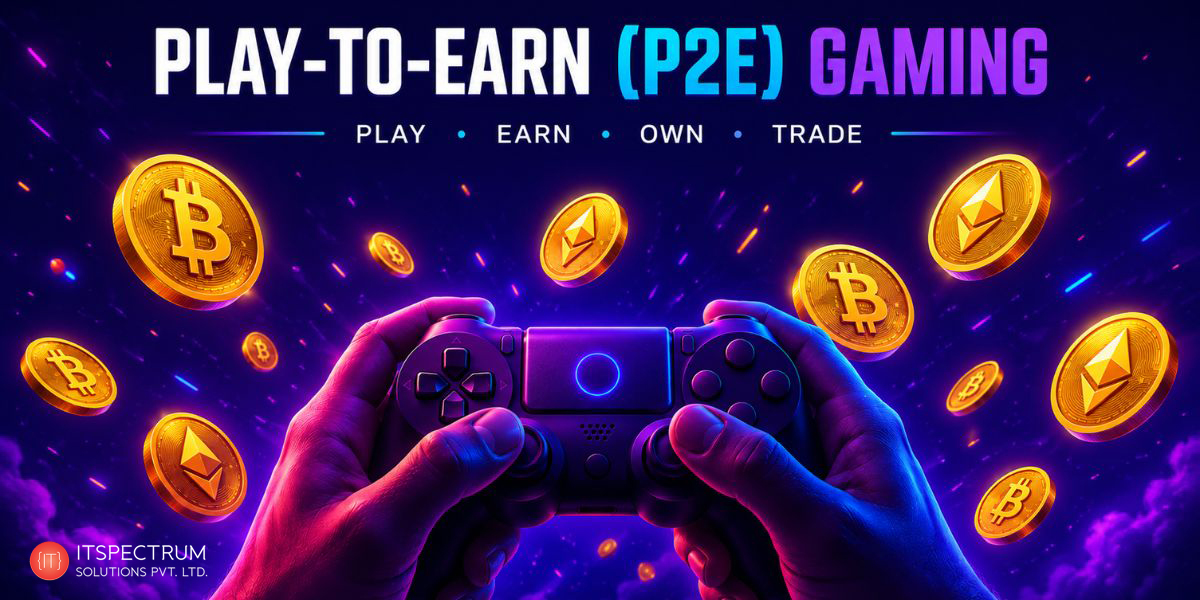
Play-To-Earn (P2E) Gaming: How To Build A Web3 Game In 2026
Play-To-Earn (P2E) Gaming: How To Build A Web3 Game In 2026
Play, earn, own and trade — P2E gaming is reshaping how players interact with games by giving them true ownership of in-game assets. Characters, land, skins and items live on the blockchain as tokens that players can keep, sell or carry into other experiences.
Here's what it takes to design and launch a Web3 game this year — and the mistakes that sink most P2E projects.
What Makes a Game "Play-to-Earn"?
In a traditional game, everything a player earns stays locked inside the publisher's servers. In a P2E game, valuable assets are issued as NFTs or tokens, so the player owns them outright. The in-game economy connects to real markets, which is both the appeal and the design challenge.
Core Components of a Web3 Game
- Game client — built in an engine like Unity or Unreal, with the same focus on fun as any other game.
- Smart contracts — minting, transferring and upgrading NFT assets, plus reward distribution.
- Token economy — utility and reward tokens with clear sinks and faucets so value does not collapse.
- Wallet integration — smooth onboarding that doesn't force new players to understand seed phrases on day one.
- Marketplace — where players buy, sell and trade their assets.
- Backend services — matchmaking, leaderboards and anti-cheat, most of which stay off-chain for speed.
Designing an Economy That Lasts
"If players only stay for the earnings, they leave the moment the earnings drop. Build a game people would play for free."
Many early P2E titles grew fast and collapsed just as quickly because rewards were funded by new players rather than by gameplay. Sustainable designs balance token issuance with meaningful spending — crafting, upgrades, entry fees — and reward skill and engagement rather than time alone.
Choosing a Blockchain
Transaction fees and speed matter enormously in games, where players can generate many on-chain actions. Low-fee networks and Layer 2 solutions are common choices, and many games keep routine actions off-chain, settling only ownership changes on-chain.
The Build Roadmap
1. Game Design and Tokenomics
Define the core gameplay loop and model the economy before development starts.
2. Prototype
Prove the game is fun without any blockchain features at all.
3. Smart Contracts and Audits
Build the asset and reward contracts, then have them audited — they will hold real value.
4. Integration and Launch
Connect wallets and the marketplace, run a closed beta, and launch in stages.
Final Thoughts
Web3 gaming rewards teams that treat it as game development first and blockchain development second. At ITSpectrum Solutions we bring both together — game engineering, smart contracts and token economy design — to help studios launch P2E games built to last.
Recent Articles
Cost To Build A Crypto Wallet App Like MetaMask
How Much Does Crypto Exchange Development Cost In 2026?
How To Build An AI Crypto Trading Bot In 2026
Let's Make The Next Big Thing Together!
Share your details and we'll get back to you within 24 hours.
Transform Your Business With ITSpectrum!
Elevate your blockchain, NFT and Web3 projects with innovative solutions and expert-driven strategies. Let's build the future together!
Let's start← Back to all blog posts