
Custom CRM Development
Businesses outgrow off-the-shelf CRMs in a specific way: the sales process no longer fits the fields, so people start keeping the real information in spreadsheets and the CRM becomes a place data goes to be forgotten.
Discuss your CRM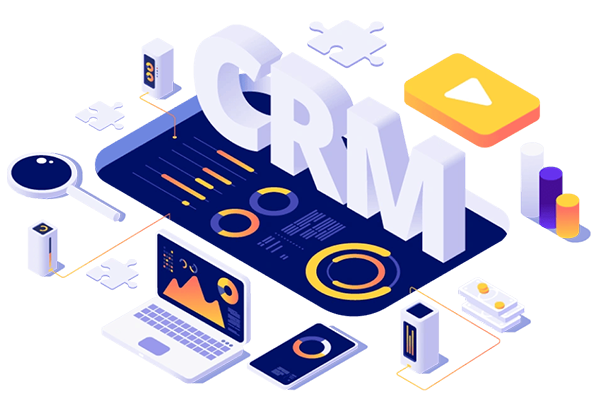
What We Build
A CRM shaped to your business rather than the other way round.
Pipeline Management
Stages, qualification criteria and forecasting that match your real sales process.
Contact & Account Records
The data model your business needs, including the relationships generic CRMs cannot express.
Workflow Automation
Task creation, reminders, assignment and escalation triggered by what actually happens.
Communication Logging
Email, calls and messages captured against the record automatically rather than by hand.
Reporting & Forecasting
Pipeline, conversion and activity reporting your management team will genuinely use.
Integrations
Connected to your ERP, accounting, support and marketing systems so data is entered once.
What Is Included
Mobile access
Usable on a phone between meetings, which is when most updates realistically happen.
Permissions
Territory, team and role-based visibility so people see their book and not everyone's.
Full audit trail
Who changed what and when, which matters for both disputes and compliance.
Data migration
Bringing across history from your existing CRM or spreadsheets, deduplicated and mapped.
Notifications
Alerts that are actually useful, tuned so people do not learn to ignore them.
Export and reporting
Your data available in usable formats — never locked into a system you cannot leave.
Industries Running On Our Systems
Business systems have to fit how a sector actually operates — its approvals, its compliance, its reporting. We start from that, not from a template.
Talk to our teamAdvanced Platform Capabilities
Business systems are judged years after launch. These are the parts that decide how that goes.
Identity & permissions
SSO, SCIM and role-based access mapped to your real reporting structure.
Audit trails
Who changed what and when, on every record that a dispute or an auditor could reach.
Integrations
ERP, accounting, banking and support systems connected so data is entered once.
Background processing
Queues with retries, dead-letter handling and visibility into what failed.
Safe migrations
Schema and data changes that deploy without downtime and can be rolled back.
Handover documentation
Architecture, operations and runbooks written as part of delivery, for your team to own.
How We Deliver
Piloted with one team before it reaches everyone.
Map the process
How your team sells today, including the workarounds, documented honestly.
Build core
Data model, pipeline and the daily workflow built first.
Pilot
One team uses it on real deals; we fix what real use exposes.
Roll out
Migration, integrations, training and phased rollout to the rest.
Build A CRM Your Team Uses
Tell us how you sell and where the current system fails. We will tell you honestly whether to build or configure.
Talk to our teamCRM Questions
Everything you need to know about our business solutions work.