
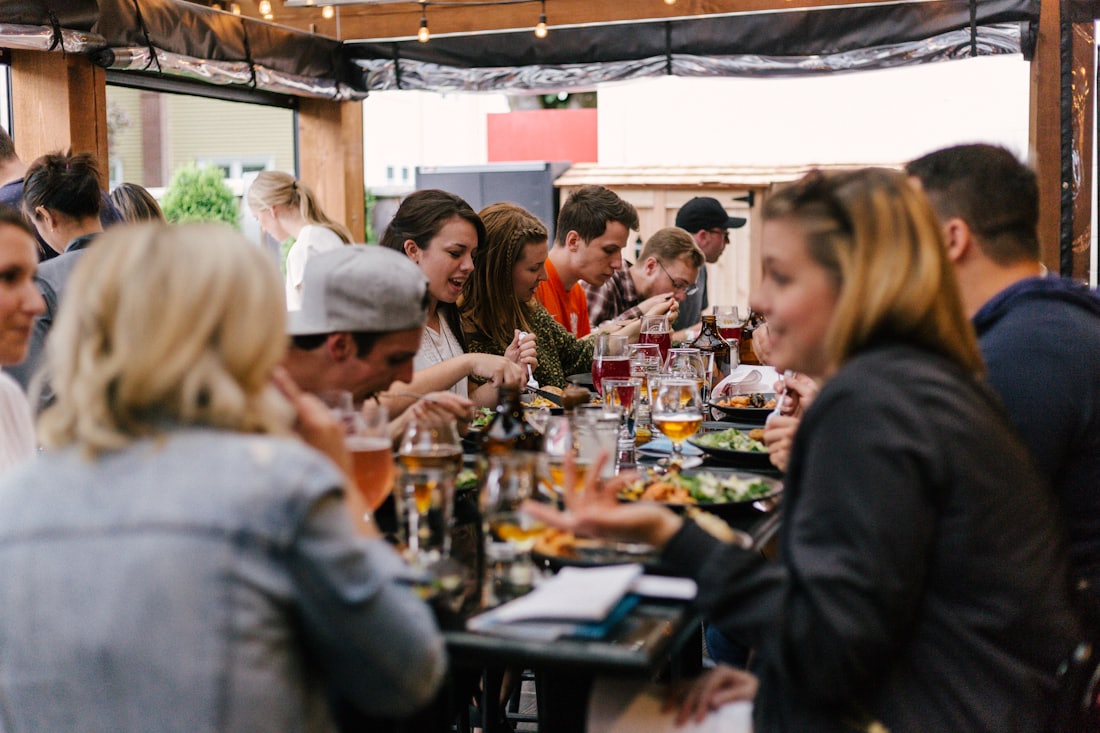
The Kitchen Is The Bottleneck
Most food ordering software is built as e-commerce with a menu. Then Friday arrives, the app promises thirty minutes, the kitchen is forty behind, riders stack up at the door and the refunds start.
We model prep capacity as a first-class part of the system. Promised times come from what the kitchen can actually produce, items go unavailable automatically, and dispatch is planned against the pass — which is the difference between a busy service and a bad night.
- Delivery promises based on real prep and rider capacity
- Menus, modifiers and combos modelled the way your kitchen thinks
- One order state shared by the app, the POS, the kitchen screen and the rider
What We Build For Food & Beverage
From the order on a phone to the plate leaving the pass.
Ordering & Delivery Apps
Branded ordering apps and web with menus, modifiers, scheduling, live status and repeat orders in two taps.
Restaurant POS
Fast counter and table service, split bills, offline mode and shift reporting that reconciles at close.
Cloud Kitchen Management
Multi-brand, multi-channel order routing into one kitchen with station-level display and capacity control.
Booking & Queue Management
Table reservations, waitlists, floor plans and covers forecasting that front of house will actually use.
Loyalty & Subscriptions
Points, stored value, meal plans and campaigns tied to real order history rather than a stamp card.
Inventory & Recipe Costing
Stock, purchasing, wastage and per-dish cost, so margin is known before the month-end report says otherwise.
What Decides Whether It Holds
Service does not pause while software recovers. These are the parts that make Friday survivable.
Menu & modifier modelling
Variants, combos, add-ons, timings and outlet-level availability — get this wrong and every other feature inherits the mess.
POS, KDS & printers
Kitchen display, ticket printers and POS terminals speaking to one order state, including when the internet drops.
Dispatch & rider routing
Batching, assignment and live tracking for your own fleet or an aggregator's, with honest ETAs.
Capacity-aware promises
Prep-time modelling and automatic throttling so the app stops promising what the kitchen cannot deliver.
Multi-outlet control
Menus, pricing, taxes and offers managed centrally with the local overrides a franchise actually needs.
Food cost & wastage
Recipe-level costing and wastage tracking that turns margin into something you can manage weekly.
What We Connect To
Almost no restaurant runs one system. The work is usually making the POS, the aggregators and the kitchen agree on the same order.
Talk to our teamHow We Deliver
Piloted in one outlet during a real service before it goes anywhere near the group.
Sit through a service
We watch a real rush — the menu, the pass, the printer, the workarounds — before designing anything.
Ordering core
Menu model, cart, payment and order state built first, because everything downstream reads from it.
Kitchen and delivery
KDS, printers, dispatch and capacity rules connected, then run against live order volume in one outlet.
Outlet-by-outlet rollout
Pilot outlet stabilised with staff trained on the floor, then rolled out — never all sites in one night.
Tell Us What Friday Looks Like
The orders you turn away, the aggregator commission, the tablet nobody watches. Bring the operational problem and we will scope the software around it.
Talk to our teamFood & Beverage Questions
What restaurant groups and food brands ask us before starting.