Multi-Currency Decentralized Wallet Development Guide
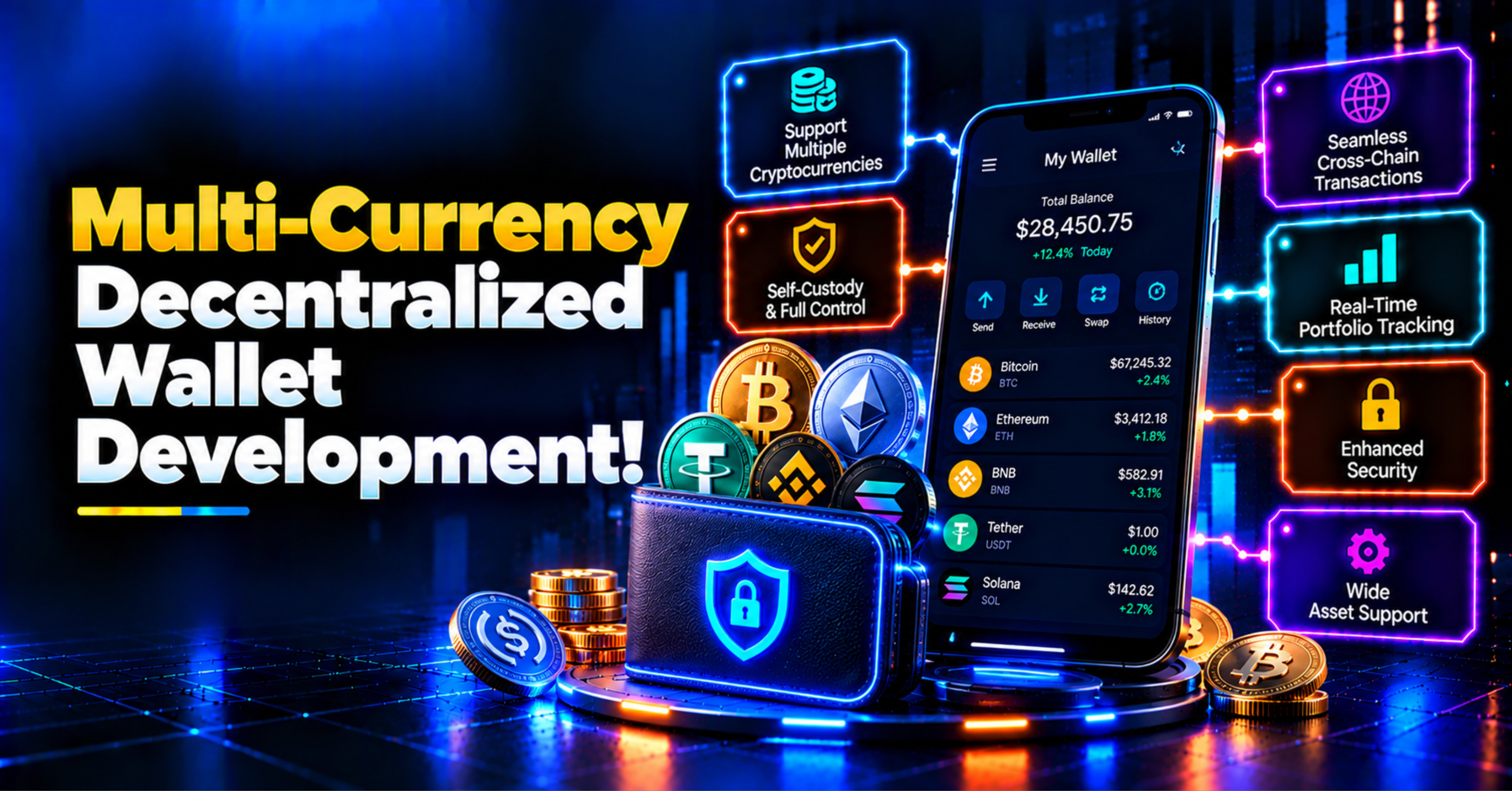
Multi-Currency Decentralized Wallet Development helps businesses build wallets that support different digital assets in one place. Users can manage supported cryptocurrencies through a single interface. They can also send and receive assets across supported blockchain networks. This makes it easier to manage a digital portfolio without using a separate wallet for every currency. Businesses can use this technology to build new products and serve users who need simple access to digital assets.
A good multi-currency wallet should be easy to use, safe, and simple to manage. It should also offer the right features for its users. In this guide, we explain how these wallets work, the main types, their key features, and the benefits they can offer your business.
Why Are Multi-Currency Decentralized Wallets Important?
People use many types of digital assets today. Managing them through separate wallets can take time and effort. A multi-currency decentralized wallet brings supported assets into one place. Users can check balances, review transactions, and manage their funds through one interface.
These wallets can also support direct control of digital assets. Users manage their own private keys instead of relying on a central provider to hold them. However, users must protect their keys and recovery phrases. Losing them may lead to a permanent loss of access.
As businesses explore blockchain products, multi-currency wallets offer a way to serve users with different asset needs. The right wallet design depends on the target audience, supported networks, and business goals.
What Is a Multi-Currency Decentralized Wallet?
A multi-currency decentralized wallet is a digital tool for managing different cryptocurrencies. It can support several assets through one app or interface. Depending on its design, it may also support tokens, NFTs, and links to decentralized applications.
The wallet uses public and private keys to manage transactions. A public address lets other people send assets to the user. A private key allows the user to approve transactions. The private key must stay secret at all times.
Most crypto assets remain recorded on their blockchain networks. The wallet helps users access and manage those assets. When a user sends a transaction, the wallet signs it. The blockchain network checks the transaction and records it if it meets the network rules.
Types of Multi-Currency Decentralized Wallets
Wallets come in different forms. Each type offers its own level of access and convenience. The best choice depends on how users plan to manage their assets.
1. Desktop Wallet
A desktop wallet runs on a laptop or desktop computer. Users install the software and use it to manage supported digital assets. Desktop wallets can offer useful tools for regular users and businesses.
Users must keep their computers safe. Malware, weak passwords, and poor backups can put wallet access at risk. Regular software updates and safe key storage are important.
2. Mobile Wallet
A mobile wallet runs on a smartphone or tablet. It lets users check balances and manage supported assets while on the move. Many mobile wallets offer QR code scanning, transaction alerts, and quick access to wallet functions.
Mobile wallets are useful for users who need easy access to digital assets. Developers should focus on simple navigation, secure access, and clear transaction details.
3. Web Wallet
A web wallet works through a browser. Users can access it without installing a desktop app. This can make the wallet easy to use across supported devices.
However, web wallets need careful security design. Users should understand how keys are managed and where sensitive data is stored. A self-custody wallet should not expose private keys to an untrusted website.
Key Features of a Multi-Currency Crypto Wallet
The right features can make a wallet easier to use and manage. They can also help users track their assets and review activity. Here are some important features to consider.
1. Multi-Currency Support
The wallet should support the currencies and networks needed by its users. It should show asset balances in a clear way. Developers should test every supported network and token before launch.
2. Send and Receive Transactions
Users should be able to send and receive supported assets with ease. The wallet should show the destination address, network, and fees before a transaction is approved. Clear details can help users avoid common mistakes.
3. Secure User Access
A wallet should offer suitable access controls. These may include a strong password, device security, or biometric access where supported. The design should also protect private keys and recovery data.
4. Transaction Notifications
Push notifications can alert users about transaction status and account activity. These updates help users track wallet activity without checking the app again and again. Users should also be able to manage their notification settings.
5. QR Code Scanner
A QR code scanner can make payments easier. Users can scan a wallet address instead of entering it by hand. The app should still show the address and network details before the user confirms a transaction.
6. Transaction History
A clear transaction history helps users review past activity. It should show useful details, such as the asset, amount, date, network fee, and transaction status. This can make digital asset management easier.
7. Multi-Signature Support
Multi-signature support requires more than one approval for selected transactions. It can help teams and businesses manage shared funds. The number of approvals and signing rules should match the needs of the wallet users.
Benefits of Multi-Currency Decentralized Wallet Development
Building a multi-currency wallet can offer several benefits to businesses. The value depends on the features, target users, security design, and supported blockchain networks.
1. Manage Multiple Assets in One Place
A multi-currency wallet brings supported assets into one interface. Users do not need to switch between many apps to check their portfolios. This can make daily asset management simpler and faster.
2. Support Global Transactions
Blockchain networks can support digital asset transfers across regions. Users may send assets to supported addresses without relying on a traditional bank transfer. However, transaction speed, network fees, and local rules can vary.
3. Improve User Control
A self-custody wallet gives users control of their private keys. They can approve transactions without asking a central wallet provider to release their funds. This also means users must protect their keys and recovery phrases with care.
4. Build New Business Opportunities
Businesses can use a wallet as part of a wider blockchain product. They may connect it with a Web3 app, an NFT platform, or another digital service. The features should match real user needs and follow the rules that apply to the business.
5. Reach More Users
Users have different needs and may hold different digital assets. A wallet that supports selected currencies and devices can serve a wider audience. Clear language, simple steps, and helpful support can also improve the user experience.
How to Plan Your Multi-Currency Wallet Project
A clear plan helps control the cost and scope of wallet development. Before starting, decide which users the wallet will serve and which networks it will support.
- Define your goals: Decide whether the wallet is for consumers, businesses, or both.
- Select supported networks: Choose the blockchains and assets that match user needs.
- Plan security: Set clear rules for key management, recovery, and transaction approval.
- Design the interface: Make common tasks easy to find and understand.
- Test the wallet: Check transactions, network connections, and security before launch.
- Plan ongoing support: Set a process for updates, bug fixes, and user feedback.
Why Choose ITSpectrum for Wallet Development?
ITSpectrum Solutions develops software and blockchain-based solutions for business needs. A wallet project starts with a clear understanding of its users, required features, and technical goals.
Our team can help plan the wallet structure, select suitable technologies, and build features around your requirements. We focus on clear communication, practical design, and a development process that supports testing and future updates.
If you plan to launch a multi-currency wallet, define your key features and target users first. A clear scope helps the development team prepare a suitable solution for your business.
Conclusion
Multi-Currency Decentralized Wallet Development can help businesses build a single interface for managing different digital assets. Features such as multi-currency support, transaction history, QR code scanning, and strong access controls can improve the user experience.
The right wallet needs more than a list of features. It needs careful planning, secure key management, clear design, and regular updates. Work with an experienced development team to turn your idea into a practical wallet solution that fits your business goals.
← Back to all blog posts