
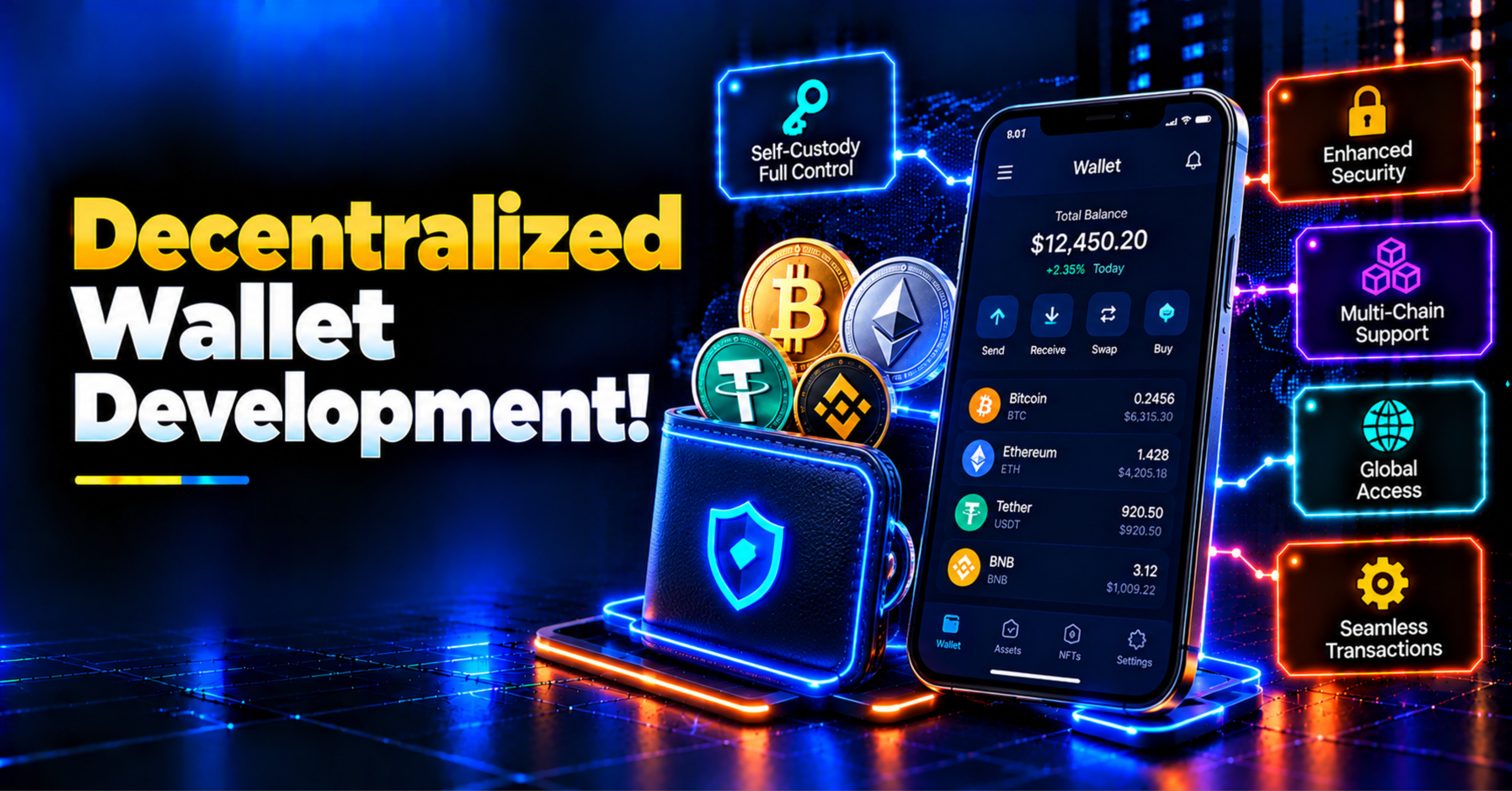
Decentralized Wallet Development: Key Benefits
Decentralized wallet development helps businesses offer users more control over their digital assets. A decentralized wallet lets users manage their assets with private keys. They do not need a central service to hold their funds. This approach can support privacy, direct transactions, and access to digital assets across the world. As demand for blockchain products grows, many businesses are exploring wallet solutions that fit their goals and user needs.
A good wallet must be easy to use and safe to manage. It should also support the assets and networks its users need. In this guide, we explain how crypto wallets work, why businesses invest in them, and which benefits they can offer.
What Is a Cryptocurrency Wallet?
A cryptocurrency wallet is a tool for managing digital assets. It helps users send, receive, and view assets such as cryptocurrencies and supported tokens. Some wallets can also support NFTs and other blockchain-based items.
A wallet uses public and private keys. The public address lets others send assets to the user. The private key helps the user approve transactions. It must remain secret. Anyone who gains access to a private key may be able to control the assets linked to it.
Wallets do not all store digital assets in the same way. Most blockchain assets remain recorded on the blockchain. The wallet stores or manages the keys needed to access them. When a user sends an asset, the wallet signs the transaction. The blockchain network then checks and records it.
Why Invest in Decentralized Wallet Development?
Decentralized wallet development can help businesses build new digital products. It can also give users more direct control over their assets. Before starting a project, businesses should study their audience, target networks, security needs, and budget.
1. Give Users More Control
A self-custody wallet lets users manage their own private keys. They do not need a wallet provider to hold their assets for them. This gives users more direct control. It also means they must protect their recovery phrase and keys with care.
2. Support Digital Asset Security
Security is vital for every wallet. A well-built wallet can use encryption, secure key handling, and clear transaction checks. Extra steps, such as biometric access, may also help protect the app. No wallet is fully risk-free, so regular testing and updates remain important.
3. Reach Users Across Markets
Blockchain networks can connect users across many regions. A wallet can help people manage supported assets without relying on one local provider. Businesses can also plan support for different devices, languages, and blockchain networks to reach more users.
4. Build New Digital Products
A wallet can become part of a wider digital service. For example, a business may connect it with a Web3 app, an NFT platform, or a decentralized finance service. These features can create new ways to serve customers. Each feature should match the needs of the target audience.
Key Benefits of Decentralized Wallet Development
Building a decentralized wallet can offer several benefits to businesses. The results depend on the product design, security model, supported networks, and user experience.
Growth Potential
Digital asset products give businesses a way to reach users who already use blockchain services. A simple setup and clear wallet features may help attract new users. Businesses should study demand and user needs before choosing which features to build.
Better Privacy and User Control
Decentralized wallets can reduce the need to share control of assets with a central provider. The level of privacy depends on the wallet design and the blockchain used. Public blockchain transactions may still be visible to others, so users should understand how their data works.
Room for Innovation
A wallet can support more than basic asset transfers. Businesses may add token management, NFT support, or links to Web3 apps. They can also improve the app over time. A clear plan helps keep the wallet useful without making it hard to use.
Support for Financial Access
In some regions, people have limited access to traditional financial services. A wallet and an internet connection may help them access certain blockchain-based tools. However, users still need a suitable device, safe internet access, and knowledge of the risks involved.
More Revenue Options
Businesses may earn revenue through optional premium features, business partnerships, or related services. Any fees should be clear to users. The business model should also fit local laws and the rules that apply to the product.
Global Reach
Blockchain networks can support transfers across borders. A wallet may help users manage supported assets in different markets. Businesses must still review local rules, network fees, supported assets, and user support needs before launching in a new region.
Features to Consider When Building a Decentralized Wallet
The right features depend on the wallet's purpose and target users. Start with the core functions, then add more as needed.
- Private key control: Give users clear and safe ways to manage their keys.
- Recovery options: Explain how users can restore access to their wallet.
- Multi-chain support: Add support for selected blockchain networks where needed.
- Token and NFT support: Let users view and manage supported digital assets.
- Transaction history: Show clear records of wallet activity and transaction status.
- Security controls: Use secure storage, app protection, and regular testing.
- Simple interface: Make common actions easy to find and understand.
- Web3 connections: Connect to trusted decentralized apps when required.
How to Choose a Wallet Development Partner
Choosing the right development team is an important step. Review its technical skills, project experience, security process, and support options. Ask how the team will test the wallet and handle updates after launch.
Share your project goals before asking for a cost estimate. Explain the target users, required networks, main features, and expected launch timeline. This helps the team suggest a clear plan and avoid adding features that do not serve your needs.
You should also ask about key management, backup methods, smart contract risks, and third-party integrations. A clear development process can help reduce risk and support future updates.
Conclusion
Decentralized wallet development can help businesses build useful blockchain products and give users more control over their digital assets. It may also support new services, wider market access, and future product growth. Success depends on good planning, safe key management, simple design, and ongoing support.
Before you begin, define your business goals and choose features that meet real user needs. Work with an experienced development team to plan, build, test, and maintain the wallet. A clear strategy can help you create a wallet that is practical, secure, and ready to grow.
← Back to all blog posts