
Android App Development Trends 2021
Android App Development Trends 2021 show how mobile technology is changing the way people use apps. Faster networks, new coding tools, and smart features are shaping app development. Android supports many types of apps, from games to business tools. Developers now focus on speed, ease of use, and better performance. These trends can help businesses plan useful mobile apps and offer a better user experience.
Android apps can help businesses reach customers, manage tasks, and offer online services. The right tools can also reduce development time and support future growth. Let us explore the key trends that shaped Android app development in 2021.
Android App Development Trends 2021: What Should You Know?
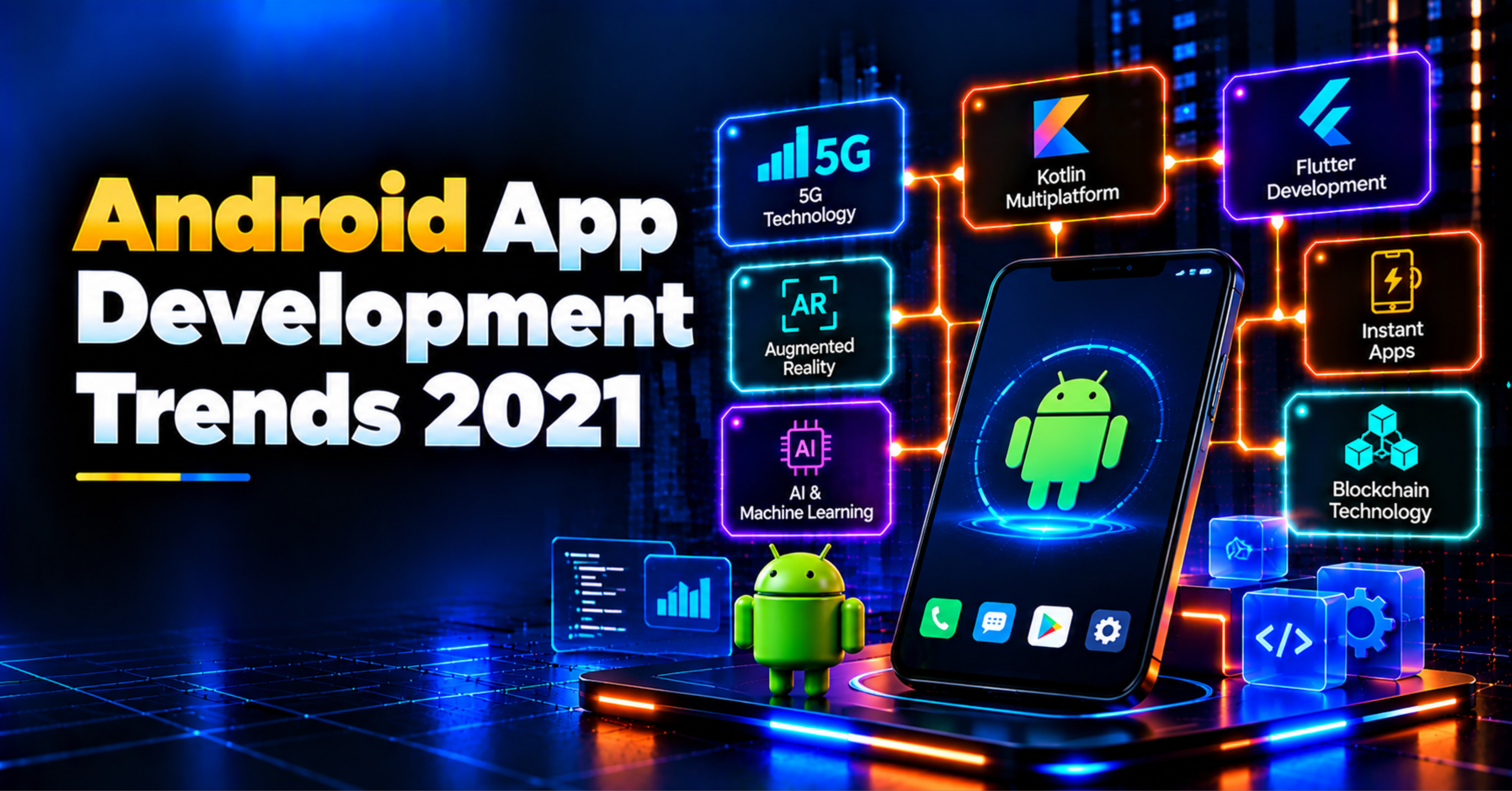
Mobile app development keeps changing. In 2021, developers paid close attention to 5G, Kotlin Multiplatform, MotionLayout, instant apps, and cross-platform tools. AI, augmented reality, and blockchain also gained attention.
Each tool serves a different purpose. Some help apps run faster. Others improve design or let teams reuse code. Businesses should choose tools based on their app goals, users, and budget.
1. 5G Technology for Faster Mobile Apps
5G is the next step in mobile network technology after 4G. It can offer faster data speeds and lower delay in supported areas. This can help apps send and receive data with less waiting.
Faster networks can support video calls, online games, live streams, and connected devices. They can also improve apps that need real-time data.
However, app speed does not depend on the network alone. Good code, server performance, and smart data use also matter. Developers should make apps work well on both fast and slow networks.
2. Kotlin Multiplatform for Code Sharing
Kotlin is a programming language used to build Android apps. Kotlin Multiplatform lets developers share selected code across different platforms. This can reduce repeated work during development.
Teams can share business rules and data handling while keeping platform-specific features where needed. This approach can help save time and keep code easier to manage.
Code sharing does not mean every part of an app must be the same. Developers can still build features that fit each platform. The best setup depends on the app and the skills of the team.
3. MotionLayout for Better App Design
MotionLayout helps developers add motion to Android app layouts. It can control how buttons, panels, and other screen elements move. These effects can guide users through an app.
For example, a menu may slide into view when a user taps a button. A panel may change size as the user moves through a screen.
Simple motion can make an app feel smooth and clear. Too much animation can distract users. Developers should use motion only when it helps people understand or complete a task.
4. Android Instant Apps
Instant app experiences let users try certain app features without installing the full app first. This can help people explore a service before they decide to download it.
For example, a user may open a shared link to view a product or try a small part of a game. This can make it easier to discover an app.
Instant experiences can be useful for online stores, games, and services that rely on shared links. They still need a clear design and a fast loading process to work well.
5. Android App Architecture
App architecture is the plan behind how an app works. A clear structure helps developers manage code, data, and screen updates. It can also make testing and future changes easier.
A well-planned Android app often separates the user interface from the data and business logic. This makes each part easier to understand and update.
Good architecture can reduce errors as an app grows. It also helps teams work on different parts of a project without creating needless complexity.
6. Google Assistant and Chatbots
Voice tools and chatbots can help users find information or complete simple tasks. A voice assistant may open a feature or respond to a spoken request. A chatbot can answer common questions inside an app.
Businesses can use these tools to support customers and guide them through common tasks. For example, a shopping app may help users find an item or check an order.
Good chatbots need clear answers and regular checks. Users should also have a way to contact a person when a question needs more help.
7. Flutter for Cross-Platform Apps
Flutter is a software toolkit used to build apps for more than one platform. It lets developers use a shared codebase for many Android and iOS features.
Flutter also offers ready-made widgets. These help teams build layouts, buttons, and other screen elements. Developers can adjust the design to match a brand or product.
A shared codebase can reduce repeated work. It can also make updates easier to manage. Still, some features may need platform-specific code. Teams should review the project needs before choosing a framework.
8. Augmented Reality in Mobile Apps
Augmented reality, or AR, adds digital content to a view of the real world. A phone camera can show a room, street, or object with extra digital details on the screen.
For example, a shopping app may let users preview furniture in a room. A learning app may show a 3D model of an object. These features can help users explore products or learn new ideas.
AR works best when it solves a clear problem. Developers must also consider device support, battery use, and ease of use.
9. Machine Learning and Artificial Intelligence
Artificial intelligence, or AI, can help apps respond to user needs. Machine learning is one way to build systems that learn patterns from data.
These tools can support features such as image recognition, smart search, content suggestions, and voice input. They can also help apps sort data and automate some tasks.
AI features need careful planning. Teams should protect user data and test results before release. A useful feature should solve a real need, not add steps without a clear benefit.
10. Blockchain Technology in Mobile Apps
Blockchain stores records across a network of computers. It can help apps keep shared records and track changes. Some systems use cryptography to protect data and link records together.
Blockchain may be useful for apps that need shared records, digital assets, or clear transaction histories. It can also support some decentralised applications.
However, blockchain is not needed for every mobile app. Developers should review the cost, speed, privacy needs, and system design before using it.
How to Choose the Right Android App Technology
Every app has different goals. A shopping app may need safe payments and product search. A business app may need user accounts and reports. A game may need smooth graphics and fast response times.
Before choosing a technology, ask these questions:
- Who will use the app?
- What problem will the app solve?
- Does it need to work on Android and iOS?
- Will it need real-time data or voice features?
- What is the project budget and timeline?
- Who will test, update, and maintain the app?
These questions help the team choose tools that fit the project. They can also prevent extra costs caused by features the app does not need.
Why Choose ITSpectrum Solutions for Mobile App Development?
ITSpectrum Solutions builds mobile apps based on business goals and user needs. Our team works to understand the project before selecting tools and planning the app.
We focus on useful features, clear design, and reliable performance. We also value regular communication so that clients can review progress and share feedback.
- Custom app planning: We review your needs and project goals.
- Android and iOS development: We help plan apps for your target platforms.
- Modern technology: We assess tools that fit your app requirements.
- Testing and support: We work to improve app quality and support future updates.
- Business-focused solutions: We aim to make each feature useful for your users.
Our goal is to help businesses turn ideas into practical mobile solutions. We work with clients to plan, build, and improve apps as their needs change.
Conclusion
Android app development continues to grow with new tools and ideas. In 2021, 5G, Kotlin Multiplatform, MotionLayout, Flutter, AI, AR, and blockchain drew attention from developers and businesses.
Each technology offers different benefits. The right choice depends on the app, its users, and the project goals. A clear plan can help control costs and support better results.
If you plan to build a mobile app, ITSpectrum Solutions can help you review your needs and explore a suitable development approach.
← Back to all blog posts